
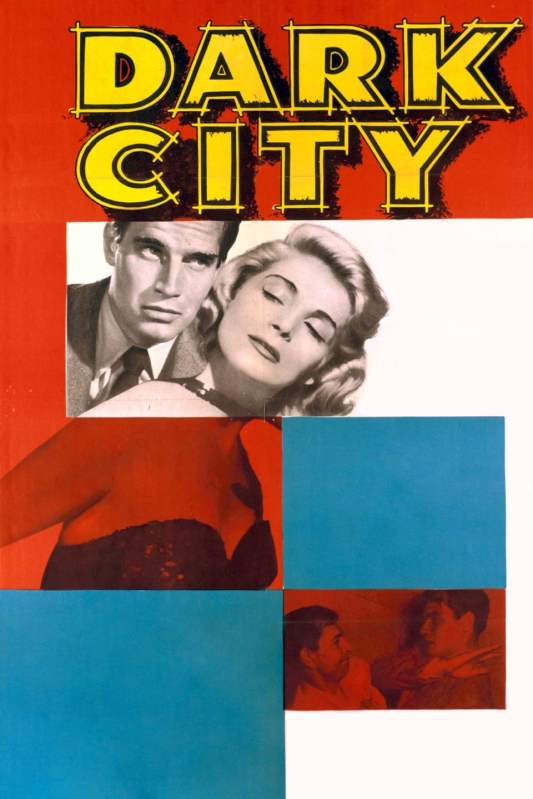
Directed by William Dieterle
Written by John Meredyth Lucas and Lawrence B. Marcus
It’s been a minute. Welcome back to both myself and my reader. The last time I reviewed a film for this blog was in January of this year. Even longer has been my absence from my movie marathons. That last post was for Flame of Barbary Coast, which landed nearly 3 years ago. I have pined to return, and return I have, hopefully with more consistency. We move on to Dark City, a film noir entry into my Poker Movie Marathon. Noir and poker seem like a match made in heaven, and even though the marathon to this point has been underwhelming when it comes to the depiction of poker in movies, I still have hopes that one of these times it will get it right, show it in a good light, or at least construct some interesting hands for us to analyze. Because to this point it all cheats and backroom dealings, etc. Unfortunately Dark City looks to continue in that legacy.
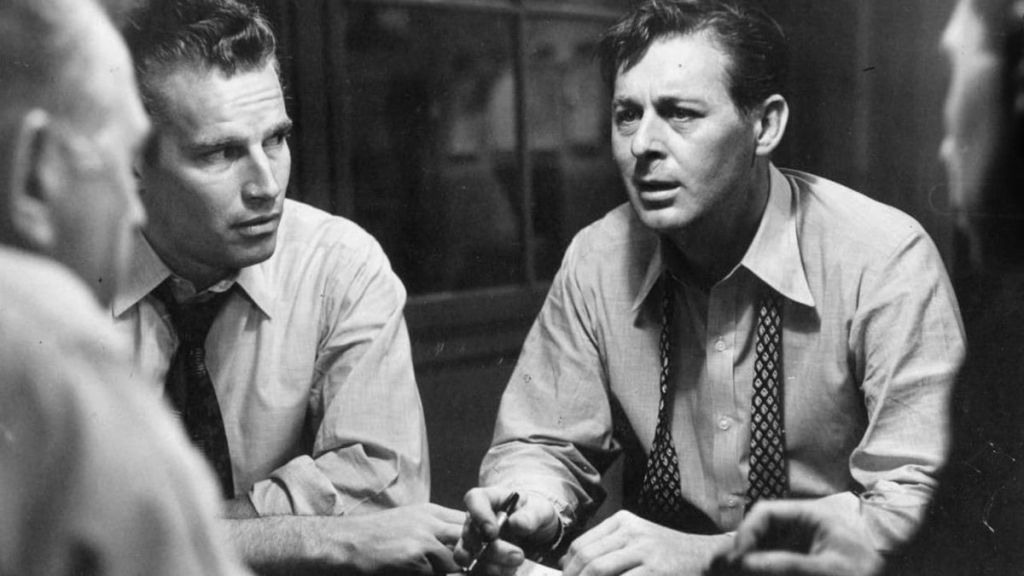
Dark City marks the film debut from one of the art form’s giants, Charlton Heston. Odd, as he comes out of the shoot fully formed, like an aged leading man who was always supposed to be headlining Hollywood films. He plays Danny, a suave and cunning con man who run an illegal, underground bookkeeping business in Chicago with his buddies. One night while enjoying the vocal talents of his girl, Fran (Lizabeth Scott), he notices an easy target in Arthur Winant (Don DeFore), who has come east to buy some athletic equipment with the $5,000 check in his wallet. Danny sees a chance to fleece him of it in a series of card games. But when Winant takes his life after the shame of losing the $5,000, Danny’s world starts to turn upside down as Winant’s psychotic brother is on the loose looking for revenge.
While Dark City is a film noir of some regard, and while we get to see Charlton Heston very early on in his famed career, this movie is somewhat chaotic and idiotic at the same time. The story oftentimes does not seem to make logical sense and takes too large of leaps for my tastes. For starters, I do not get the sense that Arthur Winant is the kind of man who would enter into a private poker game and lose $5,000 that doesn’t belong to him. He’s skeptical from the start, and even after a winning night the first go around (more on that later), he would never be down bad enough to mortgage his business and his family’s future. I just don’t buy it. Additionally, the romance that is thrown into this tale, the back and forth between Danny and Fran, is laughable. Danny, while perhaps a well-off man of means thanks to his dirty dealings, never shows Fran any affection and hardly any interest at all, and yet Fran throws herself at him. Why? This is a case of tacked on romance where woman loves man for no apparent reason other than he is man, and in this case Charlton Heston. Girl, you should have left him a LONG time ago! He only calls your singing “okay”!

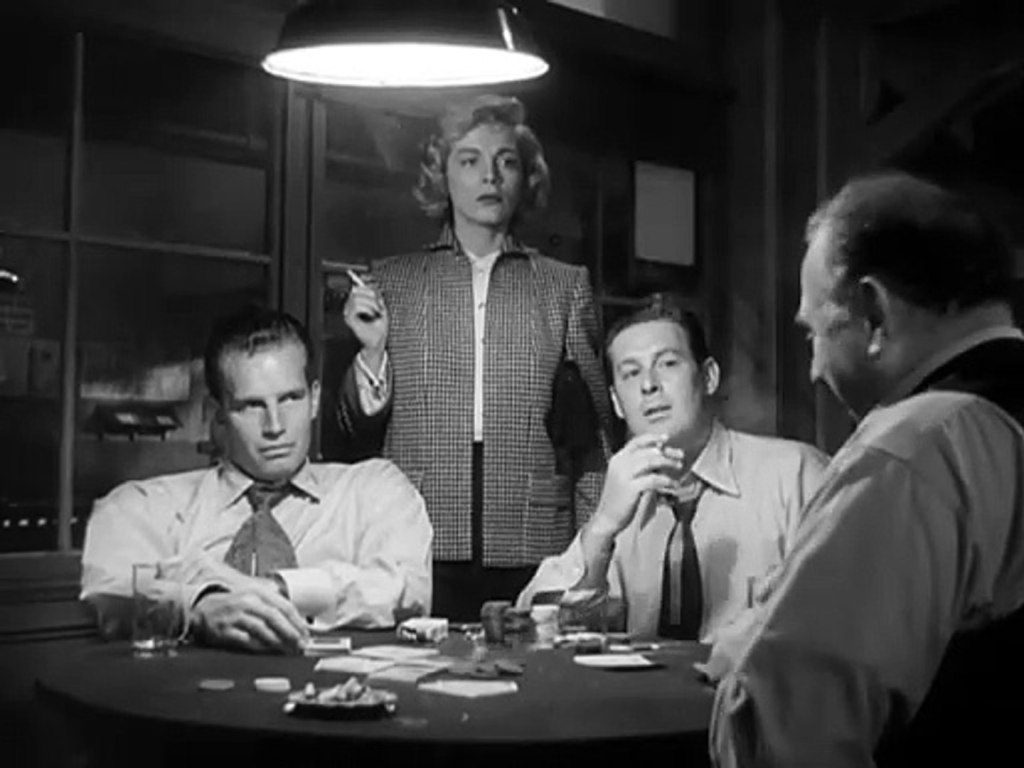
Another major grip I have with the film is the overall craftmanship. Film noir is notorious for being low budget “B movie” productions, but ones which are able to become more than the sum of their parts thanks in large part to ingenuity in filmmaking, and imagination in screenwriting. Dark City has neither. There is one trick of the trade wherein we get to see all the hands around the poker tables thanks to Fran taking a stroll around, proving the viewer her POV. But otherwise, the camerawork and lighting is uninspired, and the plotting is oftentimes boring and meandering, even featuring an entire sequence where Danny travels west to find Mrs. Winant to help track down the psychotic Winant brother, falling for her in the process. It takes far too long and provides very little benefit to the overall experience of the picture. In conclusion, Dark City has it’s pieces of film history, most notably Heston, but otherwise is a movie to miss.
Hand Analysis
Before we get into the poker hands displayed here, some background on the game. After being “recruited” into a poker game, Winant requests a single dealer who doesn’t play, even with there only being four men in the game (this isn’t his first rodeo, these are strangers, and says he only wants to have to keep an eye on one of them dealing). He’s an experienced player, obviously, and knows the pitfalls that come with playing with strangers in a dark backroom in an unfamiliar city. The game is once again five card draw, a familiar game to this marathon to this point, and still generally the game of choice in the US at this point in history. Before the first hand happens, we see that Winant is the big winner in the game and he’s ready to walk away, but they insist on one more hand, as we’ll see a clear setup to lure him back the next night when they can take all his money, now that he gets the false sense that the game might be clean.
Hand #1
We pick up the hand from Fran’s point of view standing behind Winant. He spreads his hand and we see he holds AA863, a pair of Aces, which is good enough to open the betting to $20. Both other players call. Winant draws two, improving to two pair with AA778. Fran then starts around the table and we see the next player break his already made two pair, JJ1010, discarding a Jack and a Ten to make absolutely nothing. The third and final player does similar discarding two of this three deuces to again make nothing, very clearly a setup to make Winant win. Winant bets out his two pair with another $20 bet. The next player surprisingly raises to $40, and after the third player bows out, Winant quickly calls and scoops the pot to end his big winning night.
In terms of play, there is obviously a lot wrong with this hand that can easily be explained away by the trio setting Winant up for the next night. Otherwise the play from Winant is standard. He opens with Aces, improves to Aces up, continues to bet them and just calls a single raise. Re-raising is folly with just two pair, but a call makes sense with Aces up, a hard hand to fold to a single raise only three handed.
Hand #2
The next detailed hand we see is the following night, when we join one already at the end of the hand when Winant calls down a $10 bet. Winant shows three Kings, a sure winner, only to be beat by a Full House, a very difficult hand to make in five card draw. We see the con is in full swing when Winant complains to not winning a hand in over an hour. Surely at this point he can become a little suspicious, and this is even before considering signing over his $5,000 check.
Hand #3
The third and final hand we have from this film starts with Winant opening the pot to $20, garnering one caller. He opts to draw three (a pretty obvious pair, and while it’s not stated, we can probably assume that Jacks or better is required to open). His opponent only draws two cards. Winant checks after the draw, and the opponent bets out $20, which Winant quickly calls, showing down two pair. However, his opponent once again has the best of him, showing a winner of three of a kind.
This is a peculiar hand, as like I said I assume that Winant started with a high pair, and then makes two pair in the draw, but opts not to continue betting. He’s clearly started to either be spooked or skeptical of the play of the night. On the other hand, his opponent only draws two, does that mean he already has three of kind and chose not to re-raise before the draw? That seems unlikely, although the game is clearly fixed so perhaps he did to keep Winant in the hand. Otherwise he makes his three of a kind in the draw and makes the only bet he can.
Either way, they’ve cleaned out Winant and he’s ready to leave, but somehow stays? This is in line with the illogical plotting of the rest of the movie. I don’t know how they were able to convince him to stay and keep playing when a) it clearly wasn’t his night b) they could easily be fixing it c) there is no way he signs over that check for $5,000. It seems a little more than a stretch in my opinion. Once again we see poker in a bad light, as a game played between scoundrels where the fix is always in. I don’t think there has ever been a clean game of poker played in history to this point, or at least the movies would lead you to believe that.
 Corndog Chats