
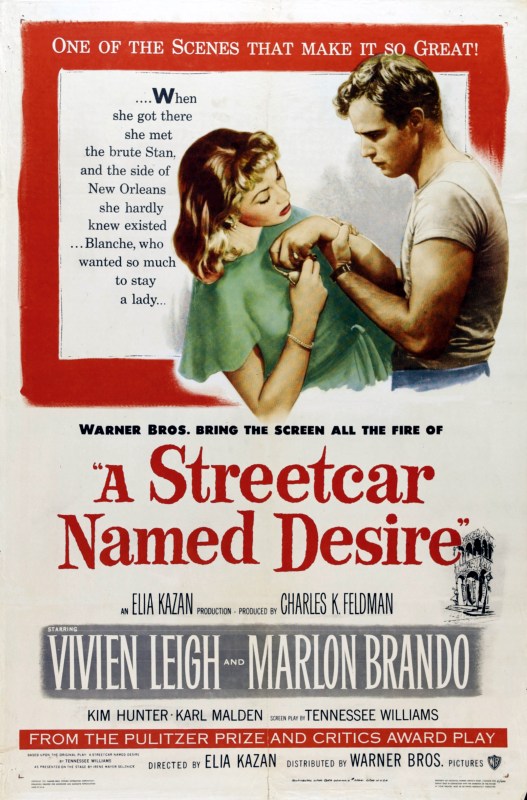
Directed by Elia Kazan
Written by Tennessee Williams
Coming from Dark City to this film in quick succession is liable to lead to whiplash. The difference in quality between the two films, released just a year apart, is astonishing, so it is no surprise that one is a largely forgotten film noir, and the other is a beloved American classic of stage and screen. Of course A Streetcar Named Desire comes from incredible pedigree simply being based on a renowned Tennessee Williams play. It has a leg up to begin with. But the cast and crew is a step above as well, as Elia Kazan is one of America’s greatest directors and Marlon Brandon one of it’s great actors. Their collaborations are the stuff of legend, and this film is evidence to their brilliance.
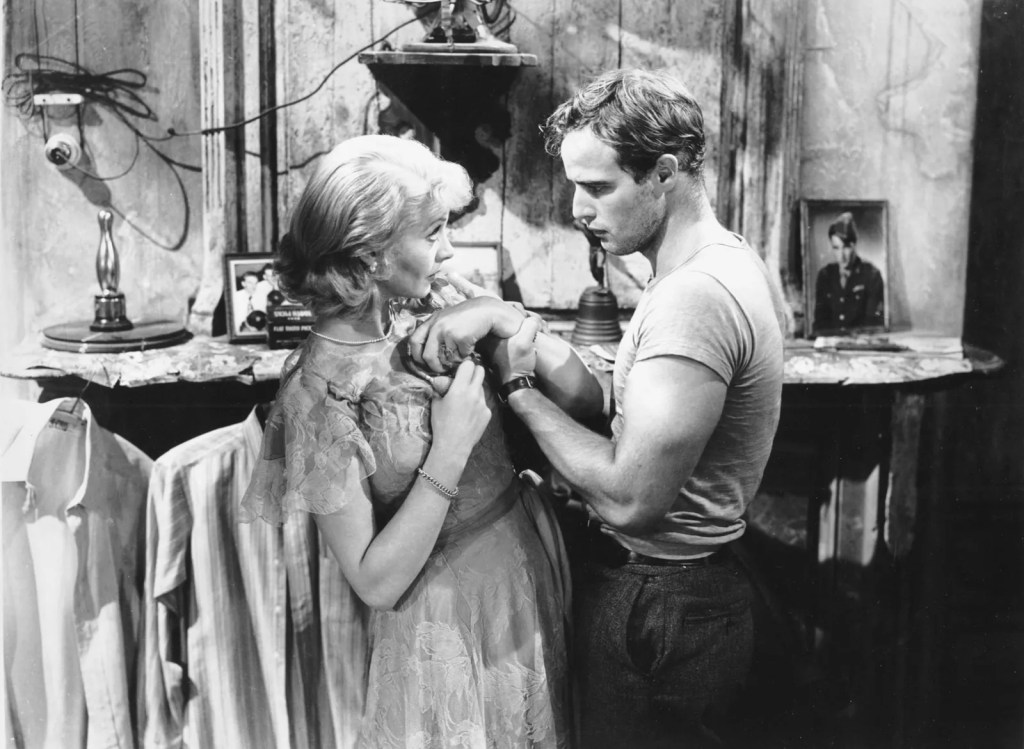
The story follows Blanche DuBois (Vivien Leigh), a disturbed old maid who’s told to take the streetcar named Desire upon her arrival in New Orleans, looking for her sister Stella (Kim Hunter) and abusive husband Stanley (Marlon Brando), with whom she hopes to spend some time after losing their childhood estate of Belle Reve. Blanche’s arrival finds Stella and Stanley mad in love, but Blanche quickly dislikes Stanley and the way he treats her sister. But over the course of a few months, Blanche delves deeper into disturbia as Stanley pokes and prods and slowly uncovers the truth of her history.
What is so striking about this film is the explosive story and plotting. Tennessee Williams is clearly one of America’s great playwrights, and with A Streetcar Named Desire he does not hold back, providing a monumental achievement in melodrama that is acutely aligned with the talents of the lead cast, particularly Marlon Brandon who plays Stanley, mumble and all, with the brutality and complexity he deserves. He’s at once a monster and loving and affectionate husband. He’s at once a loyal friend unafraid to speak his mind and a blunt instrument incapable of controlling his anger and outrage. The relationship between he and Stella is likewise complex, as seen through the unbelievable performance from Kim Hunter. Lastly, Vivien Leigh, first billed on the film, gives a wonderfully over the top and overly dramatic performance that is perhaps at odds a bit with Brando’s, but ultimately aligns with the journey of Blanche, and the odds at which she and Stanley always stand.
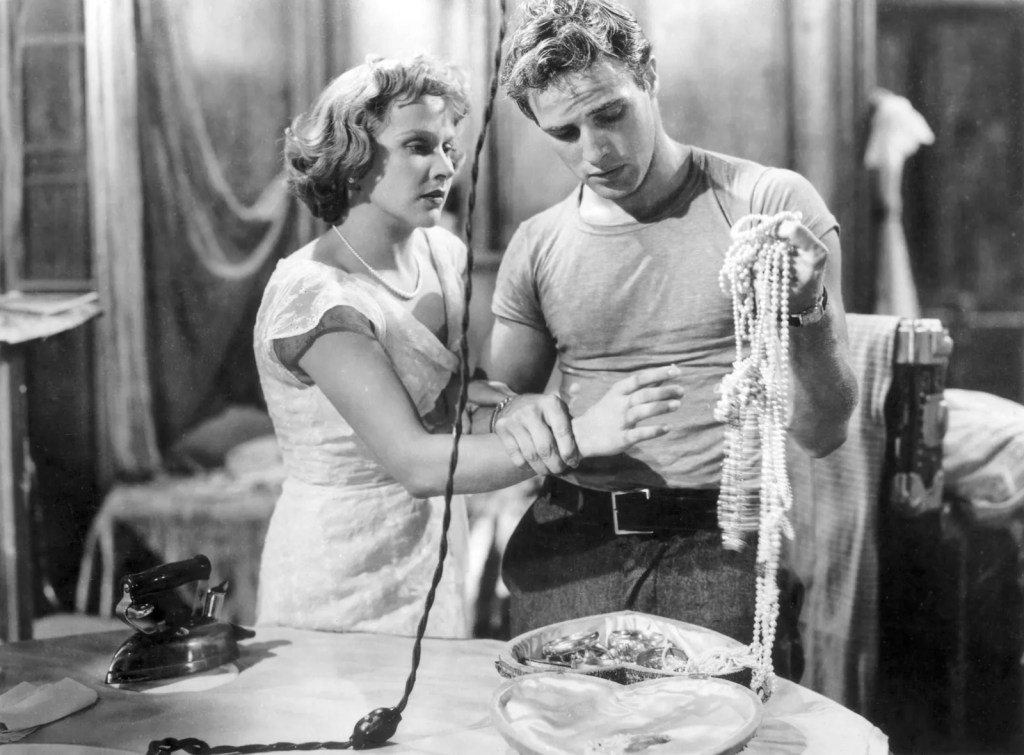
It’s not an easy film to watch for its content, the journey of its characters, but for the craft its a joy. The setting and camerawork is exquisite. The sense of mood, dread, joy, and thrill. The performances that are fit for a Broadway stage. Top to bottom the film is immaculately crafted, which elevates it well above 95% of films released prior, contemporaneously, and even today. A Streetcar Named Desire was, is, and always will be an American classic well worth seeing and returning to.
Hand Analysis
There really is not much to say here unfortunately, as there is not really any game play or hands to analyze. However, you’ll find that I included this film for two reasons:
- A Streetcar Named Desire is a great film and any excuse to watch it is well worthwhile.
- There is poker depicted here, and I have great interest in what an American classic has to say about the game, even if it’s not much.
So I got to enjoy seeing an American classic once more. Check. So on to the second reason, what does an American classic have to say about poker? Well, not much to be honest, but it is not surprising to see it cast in the light that it is. The “poker scene” is one of the most memorable in the whole movie. It leads to “Stella!” And what we can surmise from the proceedings is that Stanley likes to get drunk, smoke cigars and play poker with the boys, which leads him to be even more obnoxious and abusive to Stella and in this case Blanche. Poker=vice and bad behavior. By associating it with these other vices and by associating it with the subsequent abuse, it is guilty by association. Plain and simple. When the poker comes out, the monster comes out (a “party of apes” as Blanche calls it), and we continue on our losing streak when it comes to poker in movies.
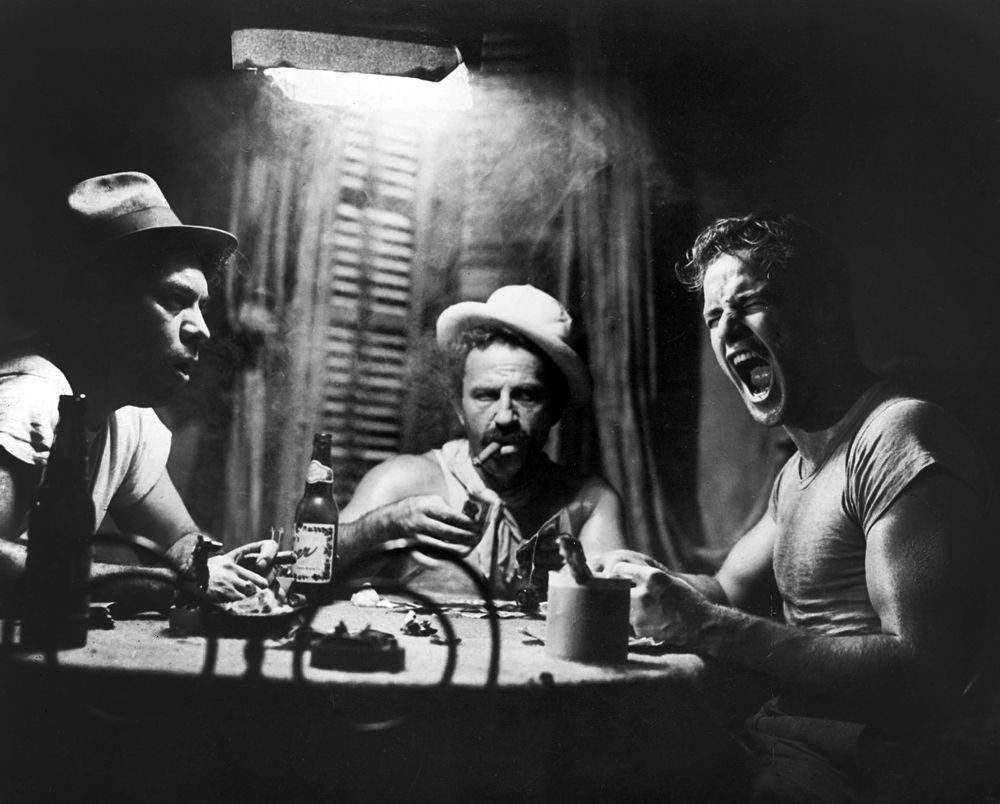
The one perhaps interesting tid-bit I did pick up from the movie concerning poker is that they appear to be playing Dealer’s Choice, which is a style of game in which the player who is dealing gets to pick the game being played. We can see this when Stanley calls a game called “Spit in the Ocean”. We don’t get to see them play the game, or any other game for that matter, but we at least get some diversity in our poker from this film with this passing mention. It’s not just five card draw. I think I saw them playing some form of Stud poker at one point as well. So while there’s not much to take from this film when it comes to poker, at least there’s that: some diversity in format.
 Corndog Chats