
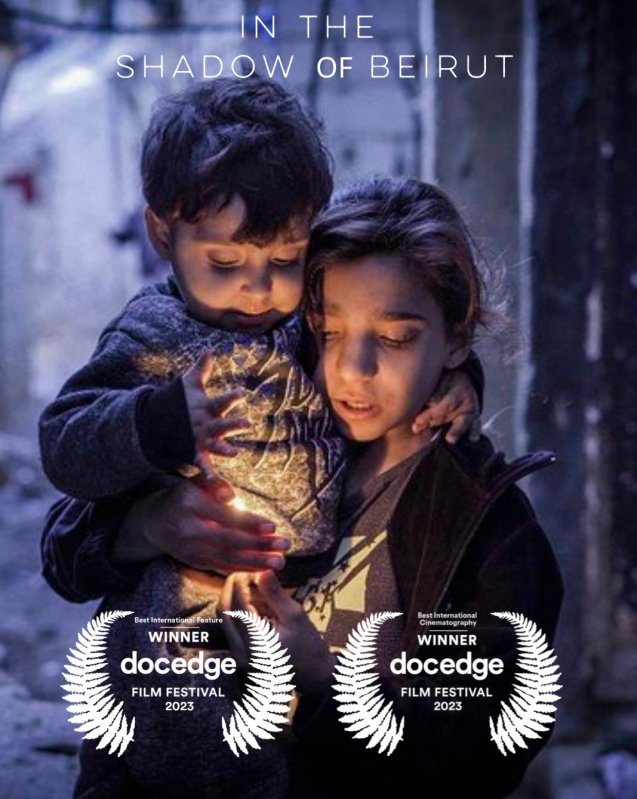
Directed by Stephen Gerard Kelly & Garry Keane
Documentaries have become a popular genre within movies these last few years, largely due to their accessibility on various streaming platforms (not everything about streamers it seems has been bad for the industry). But those documentaries are often crime, biography or sports related that garner a lot of interest. Human interest and global politics are not as popular a subject for the masses to consume when they are “Netflix and chilling”. But that doesn’t also mean that there are not a lot of documentaries to be consumed like In the Shadow of Beirut. In fact, the world is as in crisis now as it has ever been. I don’t know that it’s ever been settled, so these documentaries are evergreen, unfortunately. They are important, impactful (hopefully), and urgent in our times. But they’re also a dime a dozen anymore because there is enough global hardship to go around.

So then what makes a documentary like In the Shadow of Beirut stand out from the many other docs of the same ilk? This tale is told by two Irish filmmakers (this was actually Ireland’s submission for International Feature at the Academy Awards last year) about a set of families in the poorest neighborhoods of Lebanese capital Beirut. It also features Hillary and Chelsea Clinton as Executive Producers. These families are experiencing the worst hardships poverty has to give. Unemployment, discrimination, lack of access to healthcare, sanitary conditions, and any semblance of a way out. Add in the horrific Beirut port explosion and the onset of a global pandemic and these people are suffering, struggling to even survive.
As mentioned, there have been plenty of examples of chronicling poor neighborhoods and the hardships people of the world must go through in the worst pockets of poverty. In the Shadow of Beirut is nothing groundbreaking or innovative in its telling of these stories. Its form and function is much the same as others before it, but it doesn’t make it any less affecting. Seeing a family deal with their daughter’s skin condition, largely untreated with no hope of intervention by the government, no access to the essential healthcare she needs to survive, that experience leaves an impression. Another family dealing with the struggle of the father to stay employed in order to provide for his family, struggling to stay clean after a stint in jail, to be an example for his young son who is so clearly the light of his life. Yet another hoping to marry off their 13 year old daughter in order to find a better life, only to discover her possible suitor is not the decent man they thought he was. It’s a horrifying experience.
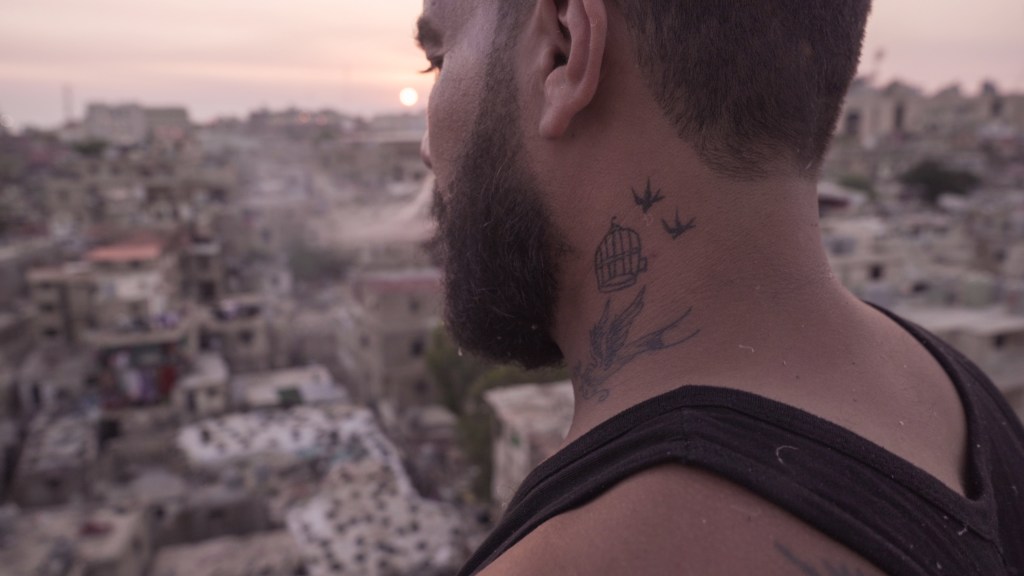
And it can sometimes be difficult to separate these harrowing depictions from poverty tourism. What effect is seeing these images, these brutal tales going to do for me, a privileged, middle class white man living in Midwest America, yes with struggles of my own, but none to the scale and severity of the families in the film? And when the filmmakers do such a beautiful job of delivering the images of the film, the cinematography as beautiful and moving as the people in it, what function does that serve in telling the story? Is this enhancing the feeling of tourism, or letting us into the beauty of humanity, even in the most difficult of circumstances?
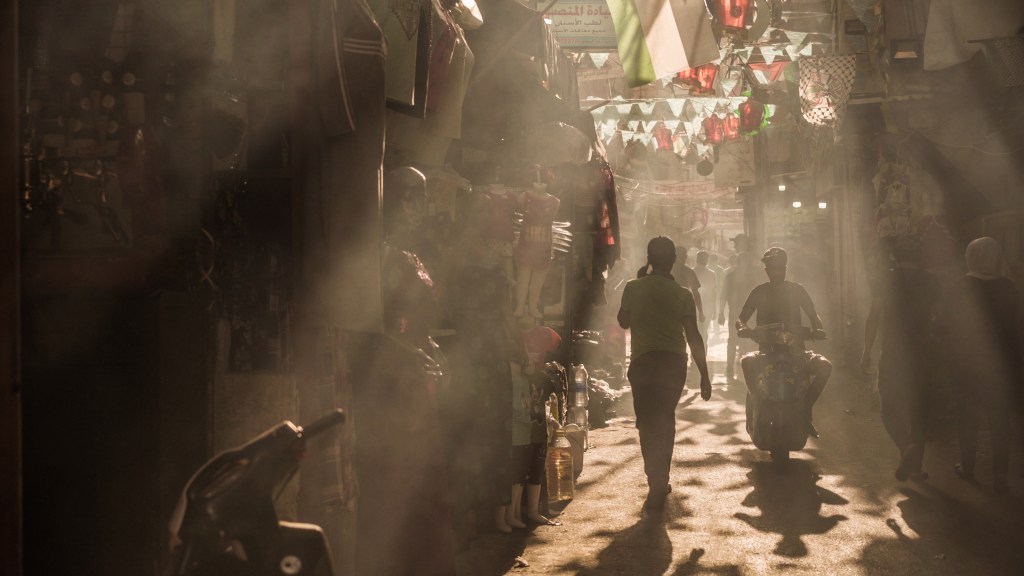
With a setting like the Middle East, of course global and regional politics play into the storylines here as well. Ultimately, it feels even more impossible to find a logical, agreeable, and peaceful resolution for the upheaval that region experiences on a daily basis. This film is not going to solve that. It’s not going to solve the severe poverty of the Sabra and Shatila neighborhoods of Beirut. It’s not going to solve anything. But documentary filmmaking is so important to shining a light on even the darkest of places and the darkest of circumstances, otherwise it would be impossible to discover, impossible to care, impossible to enact change. Ultimately, this film won’t accomplish anything, but just maybe it will move the needle enough to improve these people’s lives, to make even the smallest impact. We have to face these realities as people and do what we can, when we can, for those we can.
 Corndog Chats