

Directed by Neil Burger
Written by Neil Burger & Olen Steinhauer
In this day and age, anybody can make a movie. With everyone with a cell phone in their pocket, we’re all equipped with a high functioning piece of cinematic equipment, and you merely need to go to YouTube to see some really well produced “amateur” work. I think the ability for anyone to flex their creative muscles is a really freeing concept and good for art in general. Art doesn’t need to be good in order to serve good in the community, or for the individual. In fact, it’s essential I would say. But the question comes back to whether these are the tools that professionals should be using as well. Is there a strong narrative or artistic argument for the use of such capable, yes, but sub-standard tools in the production of a professional studio movie? Well Neil Burger shot Inheritance completely on an iPhone, so let’s find out.

After caring for her dying mother for nine months, Maya (Phoebe Dynevor) is faced with her estranged father (Rhys Ifans), who mysteriously returns for the funeral with a promising job offer. Maya reluctantly accepts, which takes her on a whirlwind trip around the world to discover truly who her father is. After setting up in Cairo under the guise of a real estate host, Maya is drug into an international conspiracy when her father disappears and she must jet set to India and Korea in search of sensitive documents in order to free her father from his captors.
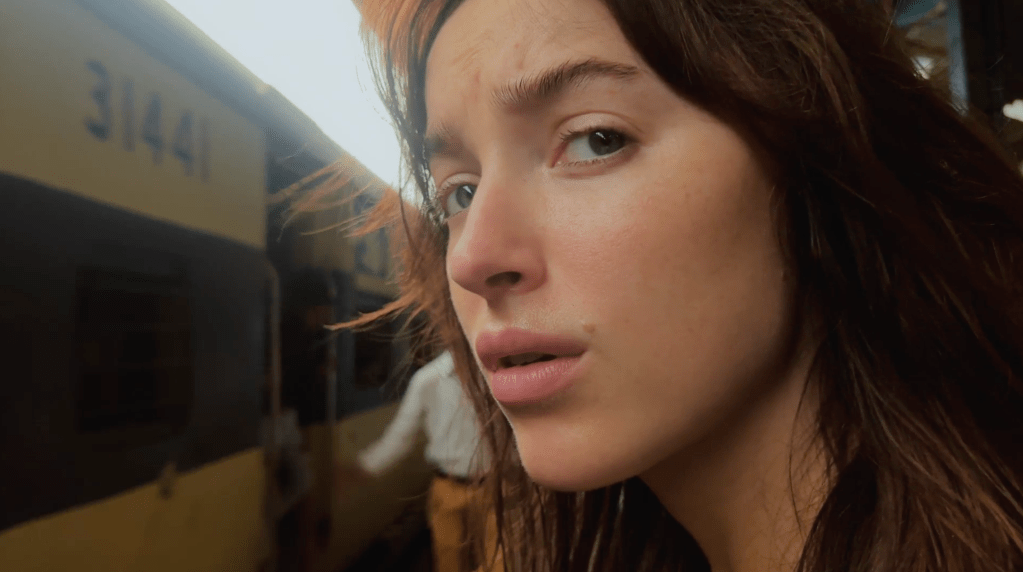
While there have been many examples of using different technologies to shoot movies, and to varying effectiveness, Inheritance stood out to me in a many ways. Visually it feels more like a documentary than other films shot like this have in the past. For instance, Michael Mann’s Public Enemies famously shot digitally for the first time, or Steven Soderbergh’s multiple experiments with iPhone shooting in films like High Flying Bird and Unsane. But Inheritance feels different as an international thriller. Burger also marries this style with that of Lubezki/Malick, a visual style I am partial to. It took a lot of adjusting to, but in the end, I think it largely worked to provide the film a little more realism and tactility.
I had some questions about the story though, as the history of these characters, their backstory isn’t fleshed out very well. I struggled to buy Maya’s willingness to follow her estranged father on this international business trip in the first place. It felt a little thin. But one thing that really stuck out about the production was that it’s essentially a one-woman show, led by Phoebe Dynevor of Bridgerton fame. While Rhys Ifans is the veteran presence, he disappears fairly early on, leaving Dynevor to fend for herself. She does a good job too, in a role that largely asks her to act with her face. Seeing her in what is ostensibly an espionage action film gives me promise for her range, not pigeon-holed to just romance or rom-coms. Burger saw fit to cast her here, and she saw fit to seek out such a role. I’m interested to see what other projects she takes on in the years to come.
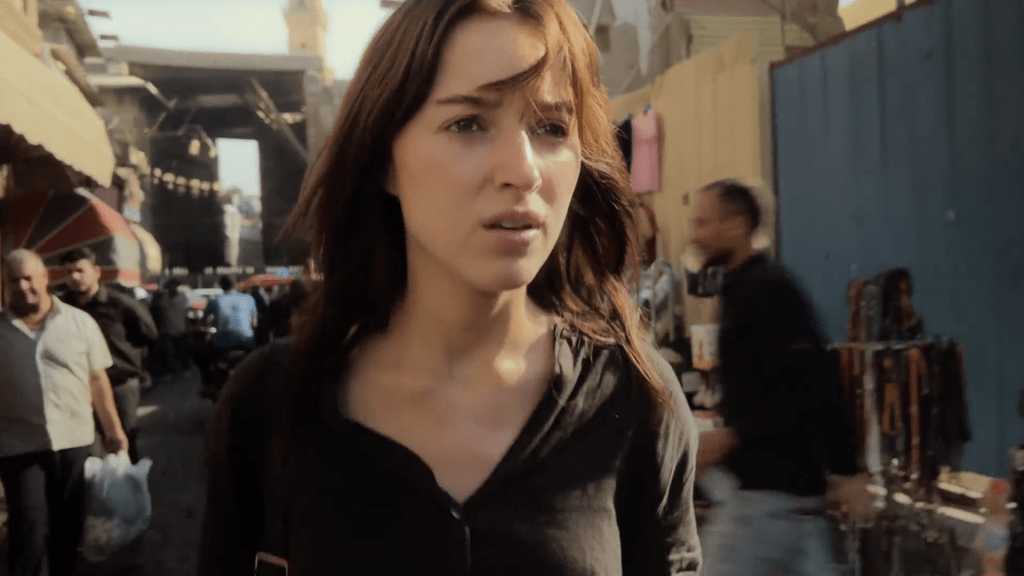
End-to-end there maybe wasn’t too much to really hang on to going away from the viewing, other than the visual style. And while the visual style is unique, I can’t really land on whether it’s a strength or weakness of the film. Ultimately it’s a distraction, something that I managed to focus on more at times than the story being told, so I suppose it’s more a weakness. Burger just doesn’t manage the style with the same aptitude as a Soderbergh (to be fair not many can, Soderbergh is a genius). There are a couple of sequences that help to keep the adrenaline going, but it’s largely a cat and mouse affair with Maya wondering the world looking for the truth, which is enough to engage during the runtime, but not to leave any real indelible mark.
 Corndog Chats