
Directed by Wong Kar-Wai
Written by Wong Kar-Wai and Jeffrey Lau
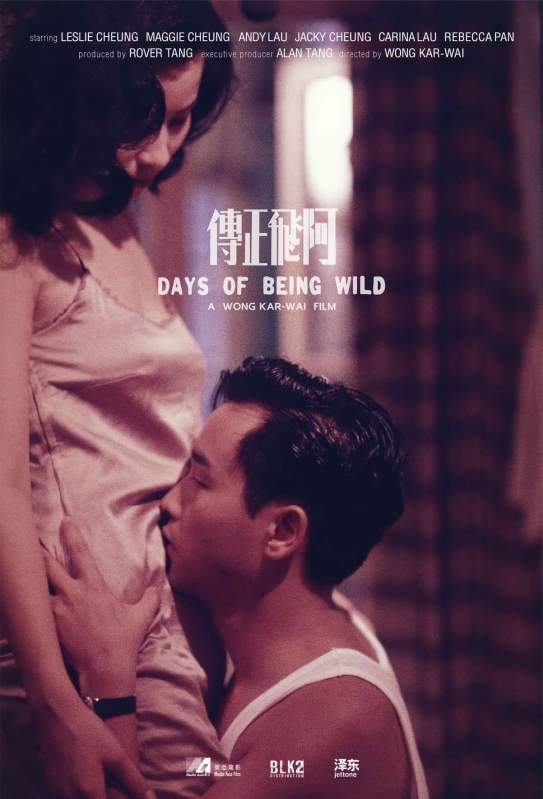
After As Tears Go By blew my socks off to open this World of Wong Kar-Wai marathon, I expected nothing less than to see him progress in his second film. In my initial review of his debut feature film, I mentioned how the gangster parts, while stylish and very cool, felt extraneous to the real strengths of the narrative and the strengths of Wong Kar-Wai’s camera sensibilities. Well, with Days of Being Wild, he essentially leans into the atmospheric filmmaking I so loved in As Tears Go By, doubling down on the mood and removing almost all of the flash and bang of the gangster sequences. It only took one film for him to make the adjustment I was looking for, which results in an even more sumptuous, sexy and beautiful journey of a film than his first.

A period piece taking place in 1960s Hong Kong, the film follows the romantic flirtations of Yuddy (Leslie Cheung), who woos and seduces a convenience clerk named Li-zhen (Maggie Cheung), only to discard her for Mimi (Carina Lau), a more outgoing dancer. After Yuddy has moved on, Li-zhen is heartbroken, but finds comfort in a night patrolman named Tide (Tony Leung). As their paths cross and they bring comfort and familiarity to each other Li-zhen and Tide’s connection feels fleeting. Meanwhile, Yuddy once again spurns a lover, fleeing to the Philippines in search of his birth mother.

There is a lot going on in the plot of this movie, but with so many moving parts and sub storylines, Wong Kar-Wai really crafts a languid and poetic film of such immense visual and emotional beauty. Dense in its themes, this film really takes the time to boil, and like so many relationships we have over our lives, it’s in the anticipation that the greatest thrills are often found. The opening sequence of the film, for example, is likely the best and most engaging thus far in Wong Kar-Wai’s career. There is such palpable tension, passion and romance between Yuddy and Li-zhen. Each time he passes the booth, grabs a coke, and seduces Li-zhen, the view also falls a little more in love with him I think. It’s such a masterfully crafted sequence. The combination of sound and music, art direction and visuals, acting and timing. It’s truly incredible.
Days of Being Wild marks the first of many collaborations of Wong Kar-Wai with cinematographer Christopher Doyle, and while Wong’s visual flair was evident in his debut film, I think Doyle takes him into another stratosphere. The aching beauty of the visuals pair so perfectly with the staging, writing and atmosphere that Wong is able to produce with his story and actors. Wong Kar-Wai directs his actors with such a veteran confidence, he writes with the firm knowledge and sure-handedness of someone who has worked on the script for years. Each chair and prop in its proper place. Each element of score or soundtrack perfectly selected. A meticulous masterpiece.

This movie feels like a dream. A dream of such immense elegance but also brutality. Wong Kar-Wai is exploring the many facets of love, lust and passion. These themes are universal, but I’ve never seen them done like this, so perfectly, so steadily, so confidently. We get the range of emotions here from the unrequited love of Tuddy’s friend Zeb and Mimi, the heartbreak of not only Li-zhen and Tuddy, but the what could have been love of Li-zhen and Tide. We even get the added subplot of the maternal love of Rebecca and Tuddy, and Tuddy’s real mother who refuses to see him in the end, as he turns his back on her as he walks away, refusing to give her the pleasure of seeing him if she won’t let him see her. Anthology films have become popular with the success of a film like Love Actually, but this is the real version, the arthouse version, the OG done not with commercial success in mind, but real human connection and raw, aching reality.
 Corndog Chats