
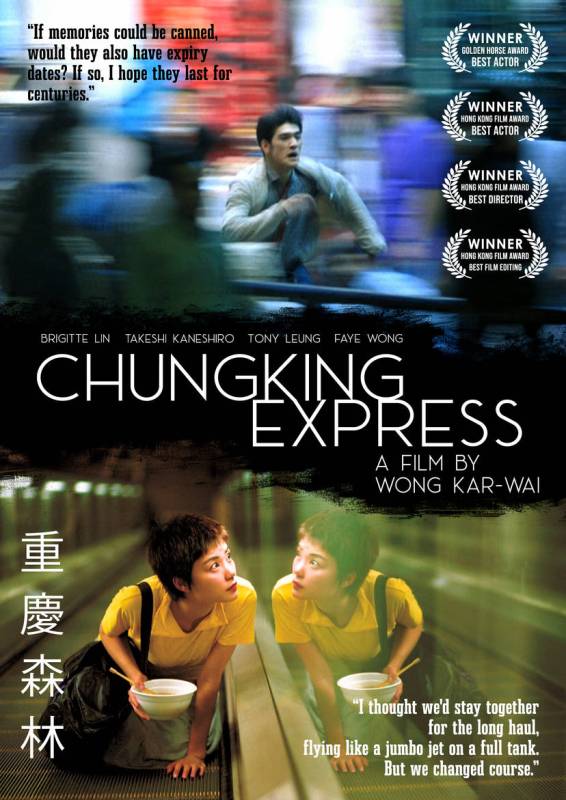
Written & Directed by Wong Kar-Wai
Chungking Express is the first real heavyweight in the World of Wong Kar-Wai marathon. It’s a film that is universally praised and sticks out among the filmography as one of his master works. It also happens to be one of the two films in this marathon I’ve seen before, but it was due time for me to revisit and re-evaluate, as I had little to no recollection of the one time I had seen it. Having the opportunity to see it again, and within the context of his other films, was a true joy and I think unlocked something I might have missed the first time I saw it. When I was first getting into movies, I went on a whirlwind crusade to expedite my film education, seeing so many classic films in such a short period of time. I was young, naive, and uneducated. I may still be largely uneducated, but I’ve lived enough life now, seen enough bad and average movies in the interim that this go around, it isn’t hard to recognize the brilliance in one of Wong Kar-Wai’s signature films.
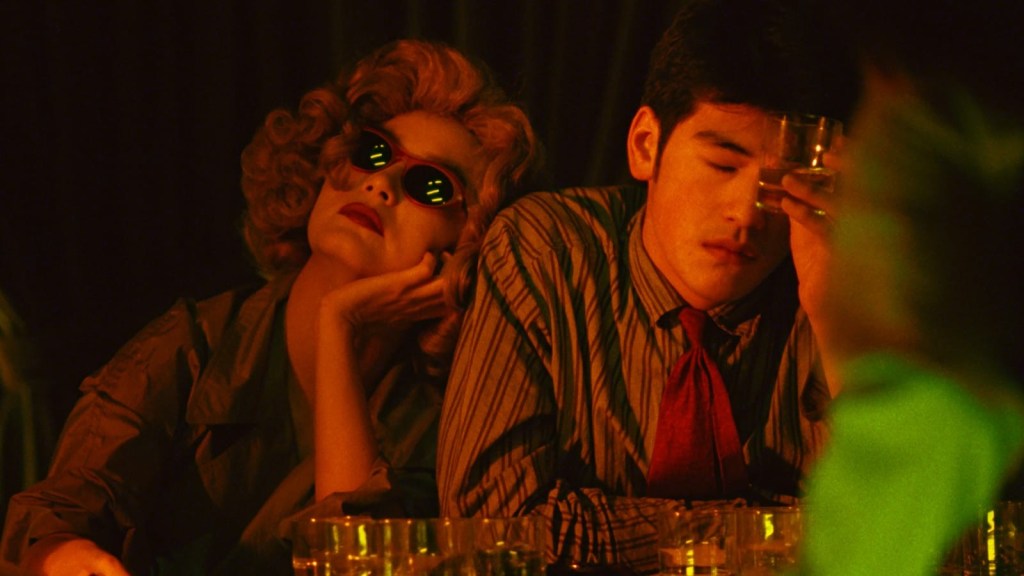
Chungking Express is kind of a two part movie, with the first act following the heartbreak of police officer He Zhi Wu (Takeshi Kaneshiro), who has just been dumped but gives himself time to get over the breakup with his girlfriend May, collecting pineapple tins all that expire on his birthday, May 1st. He runs into a mysterious woman (Brigitte Lin), who wears a blonde wig and sunglasses while trying to avoid the heat of the drug underworld. Meanwhile, the second act follows another police officer, known only by his badge number 663 (Tony Leung), who is also dealing with a break-up, but finds a new companion at a local Chungking restaurant named Faye (Faye Wong). The two proceed to play a game of cat and mouse, wherein they gradually come to realize their feelings for each other.

As a film of two movies, it’s very easy to fall into evaluating and comparing them separately from each other, but what does that make of the movie as a whole? Well, it’s complicated for me, because I naturally compared the two of course. I find myself gravitating much more to the second story of the two than the first, but they also do so well in complimenting each other in the overall message of the movie. One cannot exist without the other. He Zhi Wu and the woman in the blonde wig seem to exist within the same spaces, always crossing paths and eventually coming together for a night in a bar and hotel room, but regardless of their closeness, there is no love or true connection between them.
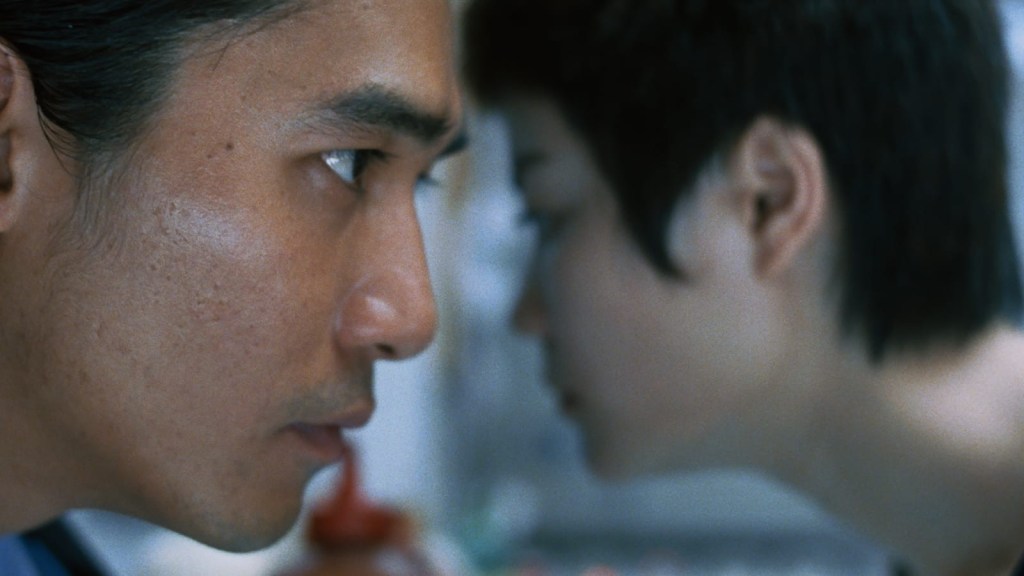
However, 663 and Faye seem to always be passing each other, but never together. Faye spends time in his apartment while he’s not there, they pass each other while Faye runs errands and 663 eats his lunch. He never finds her at the restaurant to pick up his letter. And yet they have a deep connection which neither seems to be able to deny, drawing them ever closer while staying at arms length. Love is always passing us by and the serendipity of life is puzzling. Wong Kar-Wai’s treatment of love has become a clear calling card, and with Chungking Express, he explores it in a much more theoretical manner than the direct depictions we’ve seen in As Tears Go By and Days of Being Wild. While Wong may be a romantic filmmaker, more than capable of showing the audience on screen romance, here he manages to find beauty in the space between.
The structure of the film is unsettling at first, as blonde woman in a wig darts through the night with blurry effects, and with little narrative structure to keep us oriented within the story, it takes a leap of faith, and perhaps even more than one viewing to dive deep into the appreciation of what Wong Kar-Wai is doing here. But once you find yourself on the same wavelength of Chungking Express, you can see why it’s considered one the legends greatest films, and how it fits into the wildly creative period of the early 90s indie movie scene. It’s a “never seen anything like it” experience which really progresses Wong’s delicate and beautiful visual style to yet another level of narrative and cinematic power.
 Corndog Chats