

Written & Directed by Wong Kar-Wai
The movies of Wong Kar-Wai are iconic to any film lover, but In the Mood for Love is perhaps the most iconic of all of them. Anyone who has experienced the film before (and it is an immersive experience) knows about the style, beauty, and emotional punch of the film. Anyone who has not, please go fix that as soon as possible. There are not many films I would say that about; the “I can’t believe you’ve never seen this movie!” line is among my most hated as a known cinephile, but there aren’t many movies as striking, unique and impactful as In the Mood for Love. It’s on a short list of movies that transcend. As the seventh feature film in his career, Wong Kar-Wai has reached the peak with this film, which is quite the accomplishment given the tremendous highs of his first six films.
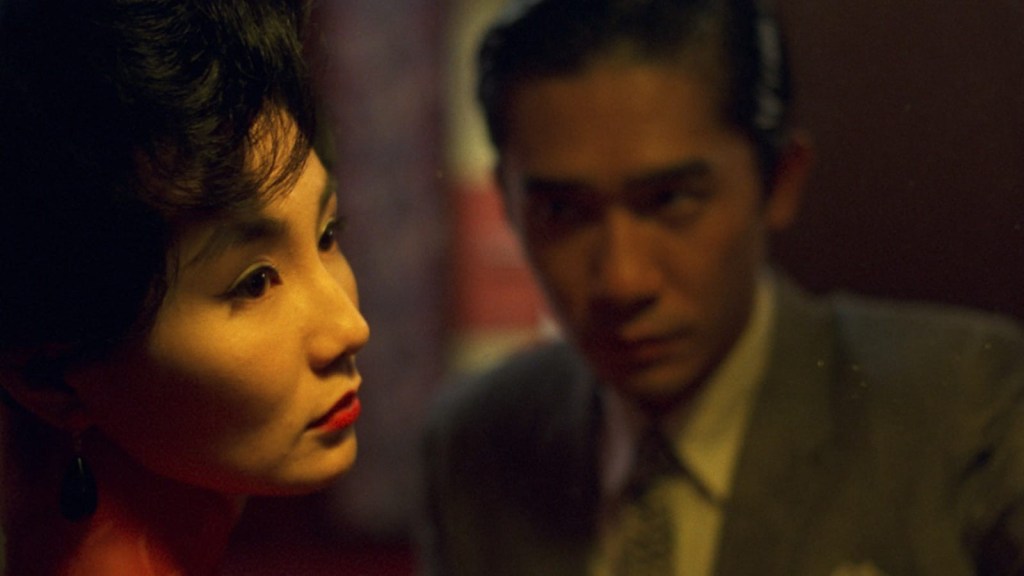
The film once again features regular Wong players in Maggie Cheung, Tony Leung and Rebecca Pan, as reliable as they come in terms of director/actor pairings in the history of cinema. Mr. Chow (Tony Leung) and Mrs. Chan (Maggie Cheung) are seeking an apartment in Hong Kong, and happen to go after the same place, Mrs. Suen’s (Rebecca Pan). But Mrs. Chan snatches it up first. Luckily for Mr. Chow, there is a room to let right next door. From there, their paths continue to cross and Chow and Chan’s bond continues to grow as they spend more and more time together as their partners remain distant, often travelling for work. Suspecting their partners of cheating on them, they vow, despite their obvious and deep connection, not to stoop to the same level.

What stands out to me, after watching the film again, as the most remarkable part of the film is Wong Kar-Wai’s ability to craft a movie so restrained and yet so stylish. These two elements seem so incongruent, but he pulls it off, resulting in one of the most visually arresting and emotionally affecting movies I have ever seen. As a romance between two married people whose significant others are cheating on them, and as a pact they themselves are not acting on their feelings, we’re treated to a series of looks, moments in passing and conversations that are completely charged with sexual tension with no release or satisfaction. Leung and Cheung say everything in everything they don’t say. They communicate the love and passion just by their posture and the way they look at each others. It’s an incredibly sexy film somehow.
Well, maybe I do know how: Christopher Doyle and Wong Kar-Wai and up to their same shit again, crafting an incredibly beautiful and sumptuous visual tale. The colors, the fashion, the setting, the camera work is maybe Doyle’s best, which is saying something as his collaborations with Wong are impeccable. Leung and Cheung are sexy as hell and wear the hell out of the incredible 1960s era clothes. Maggie Cheung looks incredible in every single dress. Tony Leung is the sexiest man alive in every single suit. It’s pretty easy to buy them falling madly in love with each other. But again, it comes back to the restraint that Wong shows in telling this tale.

In the Mood for Love a visual masterpiece, but by withholding so much in the way these characters interact, we’re treated to something Hollywood would have easily butchered with obvious, over-the-top, romance tropes we’ve seen a million times before. Wong Kar-Wai is truly one-of-one. His catalog of work is among the greatest of any filmmaker, capped beautifully by this, his masterwork. It is a film that I will return to more than any of his others, and will return to throughout the rest of my life. From the clothes, the romance, the visuals and the iconic slow-motion moments set to “Yumeji’s Theme”, In the Mood for Love is iconic and indelible. An important film in the history of cinema.
 Corndog Chats